Aents2022, Interactive Installation
Aents is an interactive installation that projects a metaphorical entity onto the floor, representing our environment and reacting to visitors’ movements. Depending on whether the gestures made are gentle or forceful, this entity evolves either toward a proliferation of life or toward total degradation and the sterility of the environment. This playful experience serves as a bridge to deeper reflection, inviting the user to subsequently consult resources on the legal recognition of natural entities for their protection.
This project was completed as part of the Master's program in Digital Creation and Publishing at Paris 8 University. Our group consisted of three people; I primarily contributed to the project by developing the interactions, implementing motion detection, and creating the presentation video.
You can view the project presentation by clicking here
Context
The goal was to design an interactive digital experience for a third place that could raise public awareness about the environment. Given the fragmentation of attention and the difficulty of conveying an engaging message, the main challenge was to create a solution that was brief, original, and educational.
Our Vision
The current economic model, based on infinite growth in a world of finite resources, is unsustainable and requires a paradigm shift toward a circular economy that places the environment at the heart of our systems, thereby overcoming the Western dichotomy between Nature and Culture.
Concrete legal initiatives, such as granting legal personhood to rivers or forests, illustrate this new vision in which humans are no longer owners but members of a collective that includes non-humans. This approach, which focuses on perception and avoids moralizing discourse about individual responsibility, offers an ideal bridge for raising public awareness in a fun, impactful, and accessible way in a short amount of time.
Research and Inspiration
The guiding principle of our research was initially shaped by the work of anthropologist Philippe Descola, which demonstrated that the dichotomy between nature and culture is far from universal. From there, we drew inspiration from a wide range of works and installations that place humanity back at the center of the environment.
An Ode to Nature Through the Senses
These early works offer a sensory and immersive experience within a given environment. Through an aesthetic approach inspired by nature, these works invite viewers to develop an appreciation for forms that are sometimes strange.
However, these contemplative experiences relegate the user to a passive role. We wanted to convey a message, spark reflection, and perhaps even inspire action. These works therefore served as inspiration but were not the ultimate goal of our project.
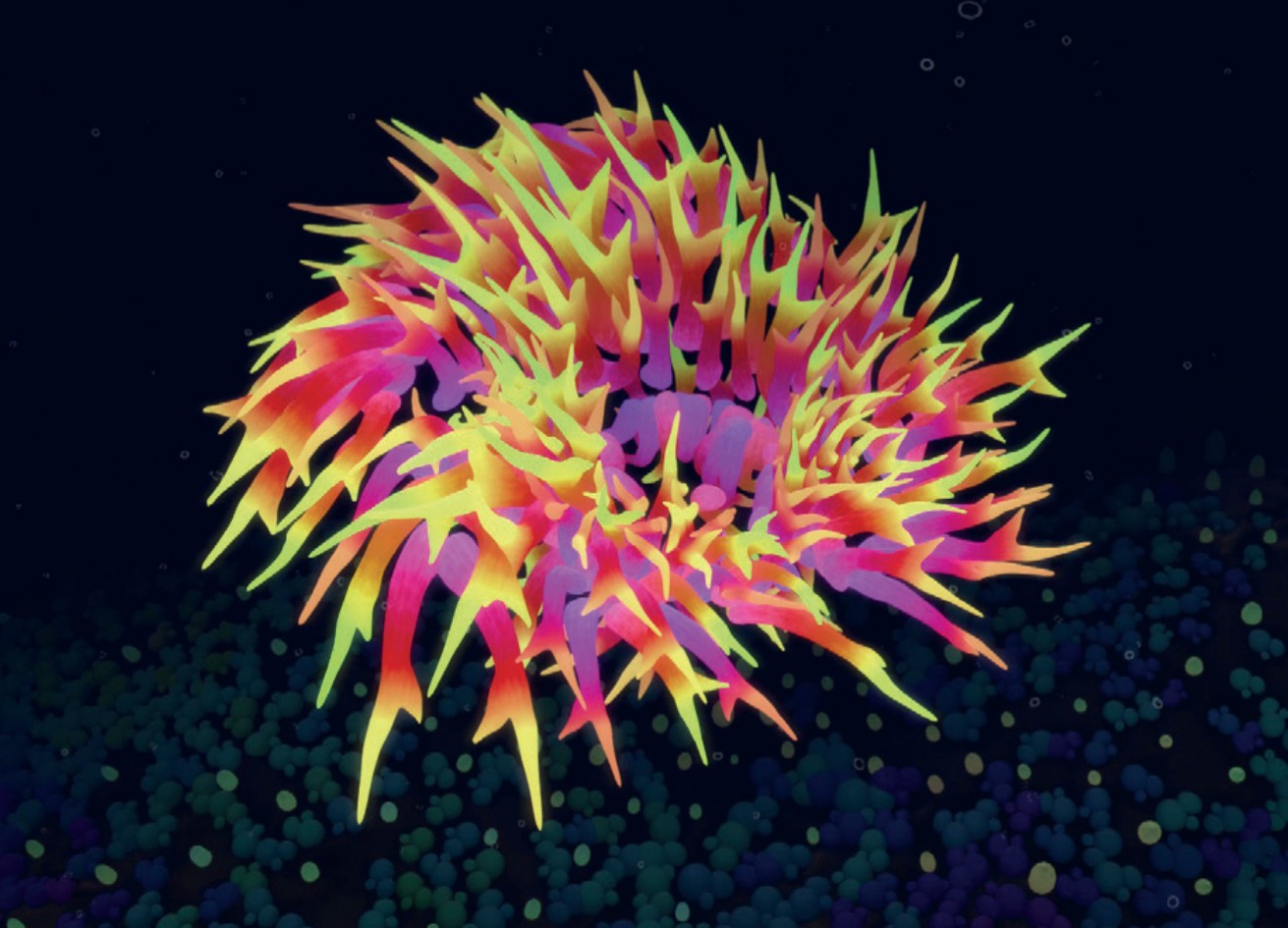
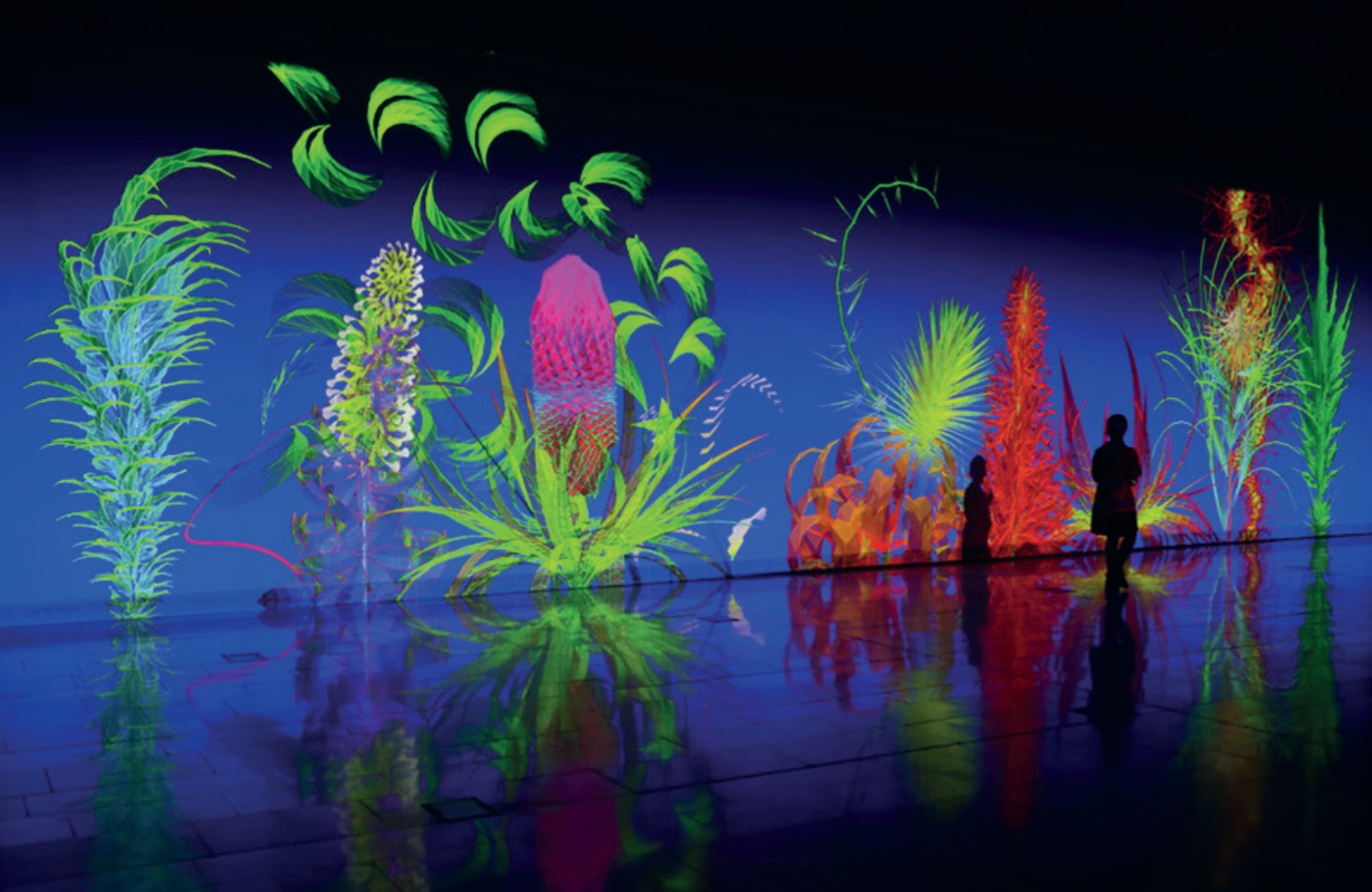
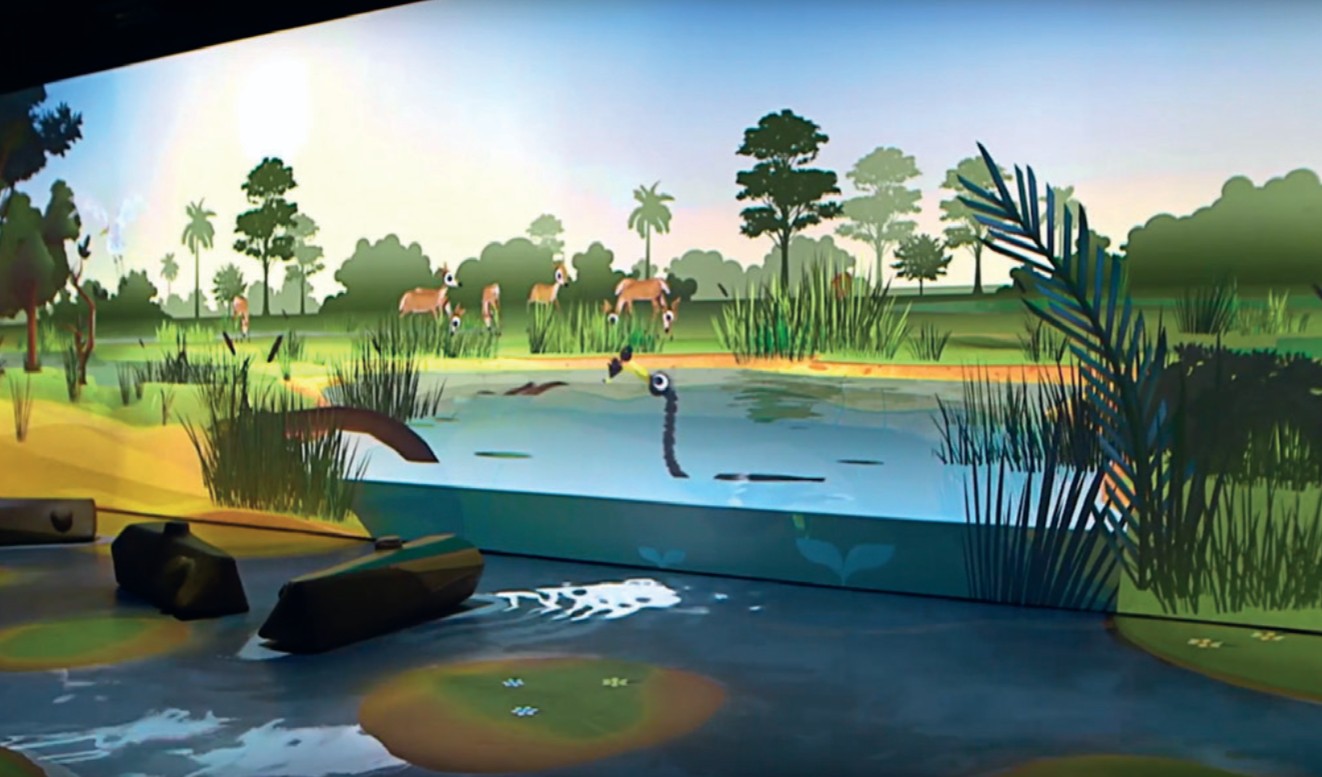
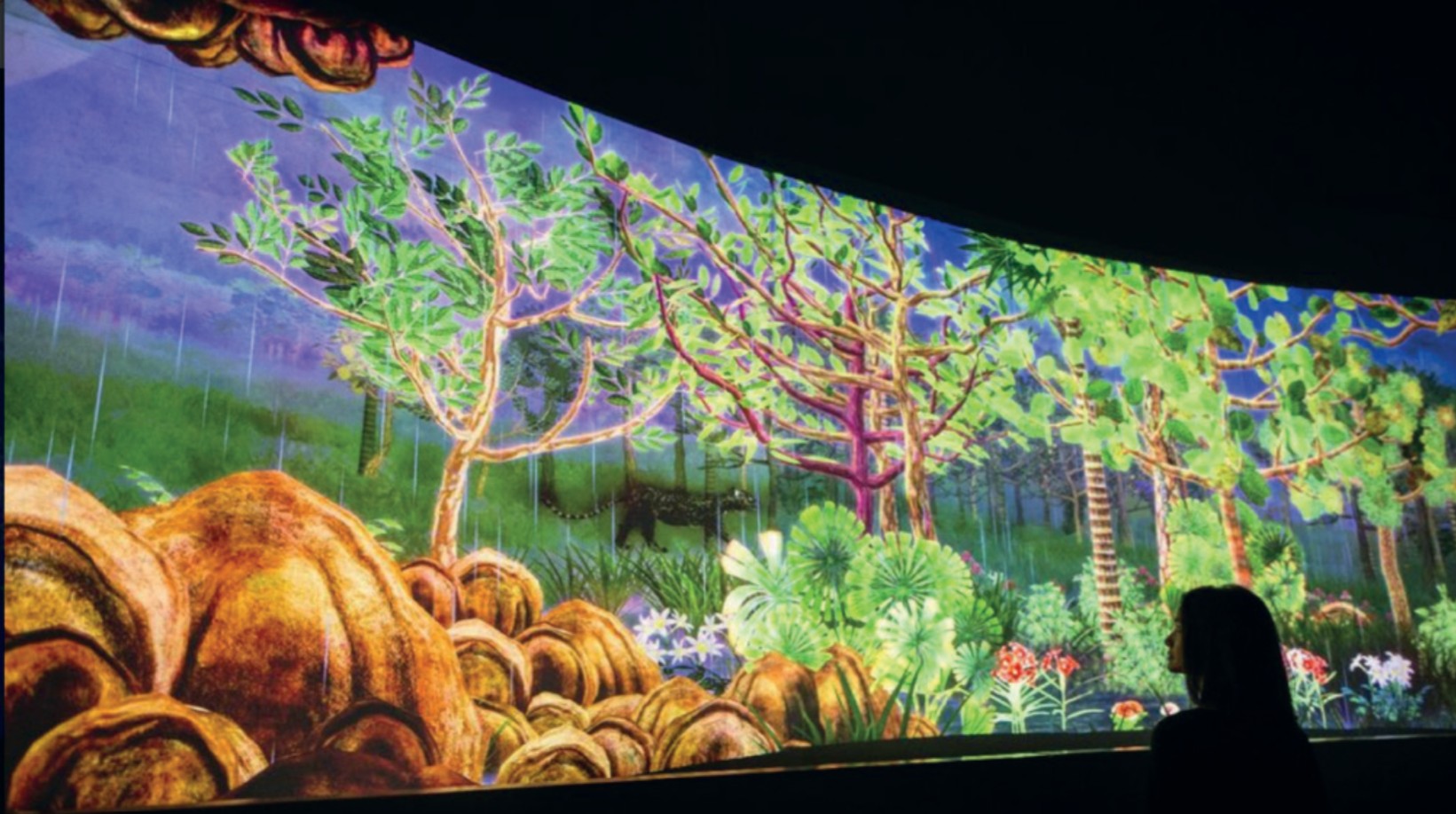
Image 1 : Vincent Houzé - Seeds
Image 2 : Miguel Chevalier - Extra Natural
Image 3 : Formula D - River of Grass
Image 4 : Story of the Forest - Permanent National Museum of Singapore
Interaction
The guiding principle of our research was initially shaped by the work of anthropologist Philippe Descola, which demonstrated that the dichotomy between nature and culture is far from universal. From there, we drew inspiration from a wide range of works and installations that place humanity back at the center of the environment.
Interaction Methods
Aents is located in a space with a significant number of visitors and, consequently, users. It was therefore important for us to find a projection solution that would enable an immersive, shared experience. For this reason, we designed Aents as a projected surface.
We initially envisioned a wall projection, but then shifted our approach and opted for a floor projection instead. This solution allowed for a more immersive experience and made it easier to share the experience with others. Below is an image of the first version of the floor projection.
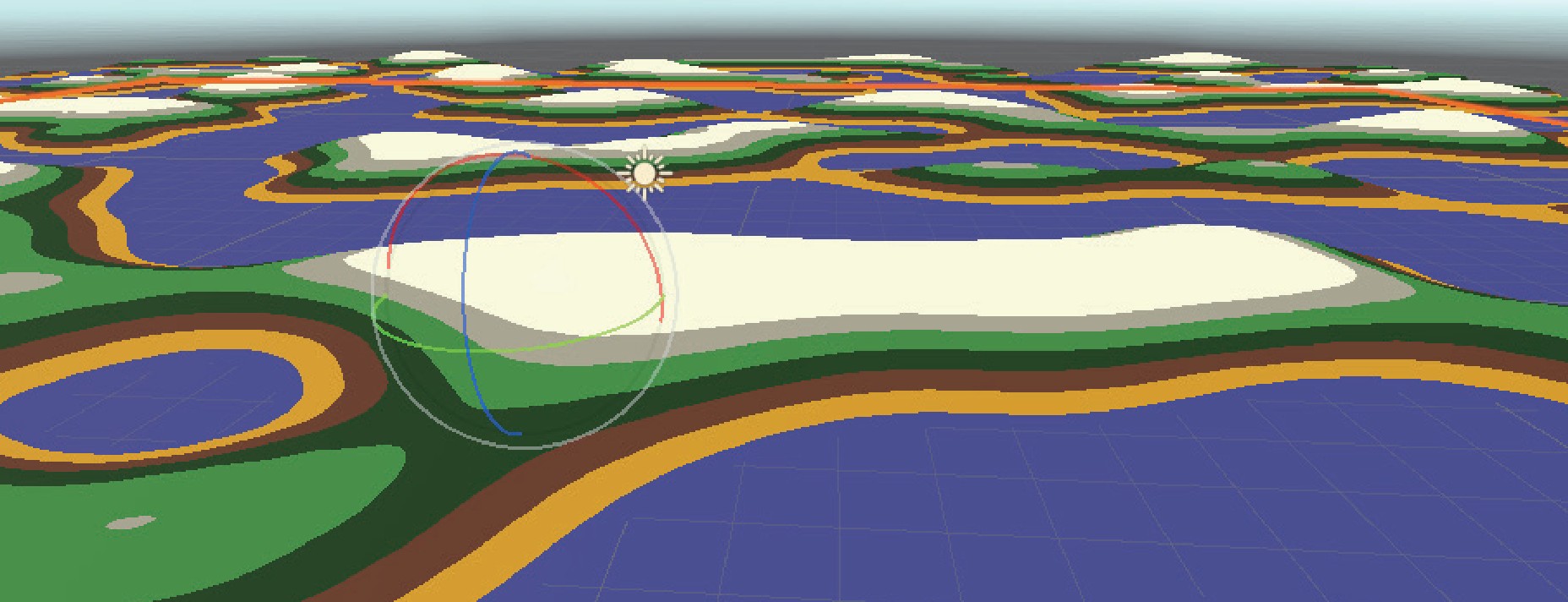
Interaction System
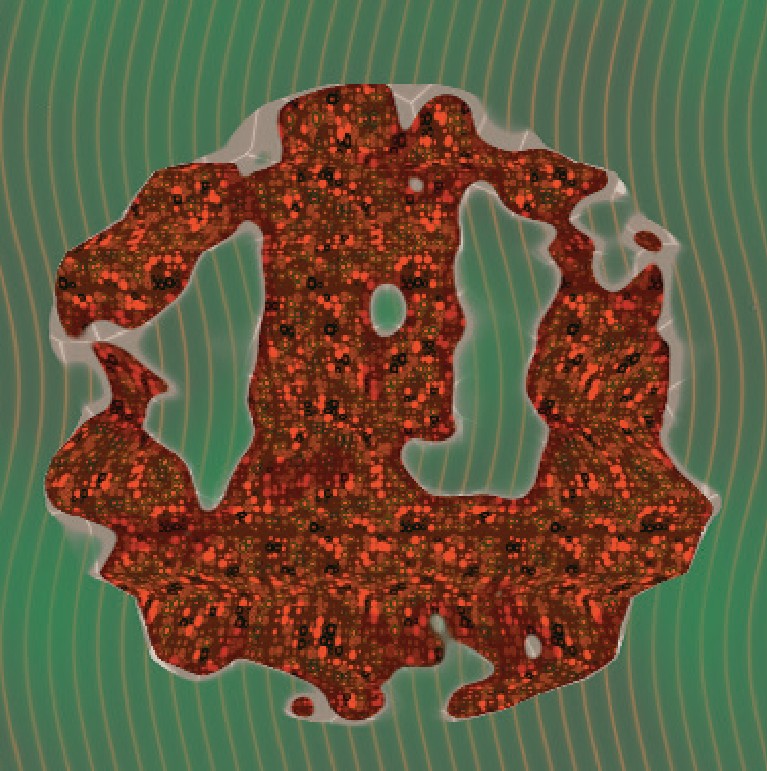
We wanted the entity to represent our environment and the various elements that make it up. So we envisioned a system in constant flux—for better or worse—that is never static, and that has the capacity to deteriorate or become more complex. We therefore chose to use a “scale of environmental richness” as our variable. Within the logic of the system, this scale can be likened to a state of health.
Thus, this richness is conveyed visually: first through its behavior, as reflected in various animations (wariness, startled reactions, flight, movement, spawning, etc.), and second through its composition, which features many elements when richness is at its peak, and very few—or even a complete absence—when richness is at its lowest.
Interaction Matrix
Since aents revolves around the concept of movement and manifests itself within a physical space, we thought it would be interesting to use bodily gestures as a variable for interaction. We therefore chose to evaluate gestures based on their speed. A gentle gesture would be interpreted as positive, whereas an abrupt gesture would cause the entity to retreat.
Mediation
Distinguishing between abrupt and gentle movements allows for intuitive control of the device, encouraging the user to spontaneously adopt a respectful attitude toward the virtual entity—which is the first step in raising awareness.
In the event of total environmental degradation, the appearance of a QR code implicitly invites the visitor to continue their learning journey to a dedicated website focused on the rights of living beings. This transition provides both an indirect explanation of the game’s abstract metaphor and a tangible continuation of the educational process.
Aents Representation
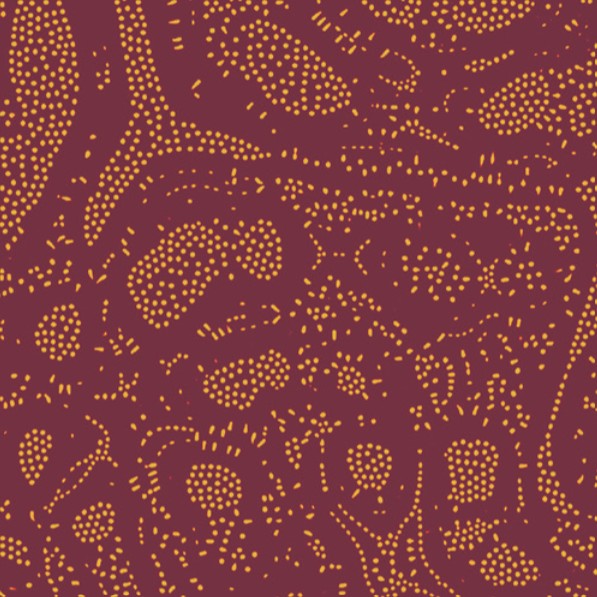
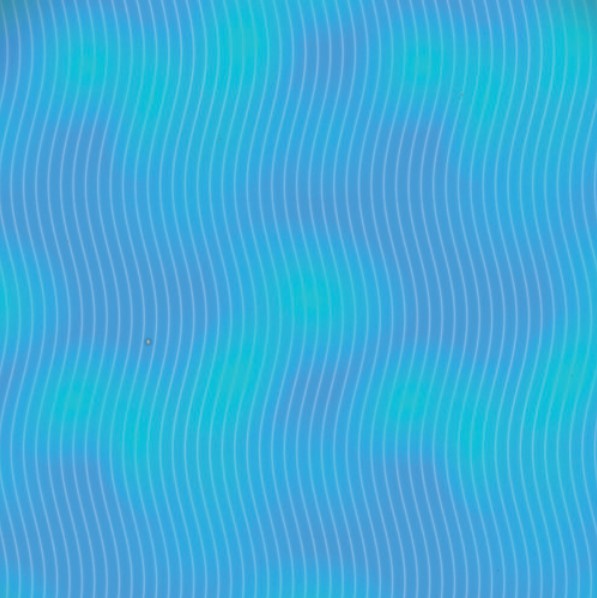
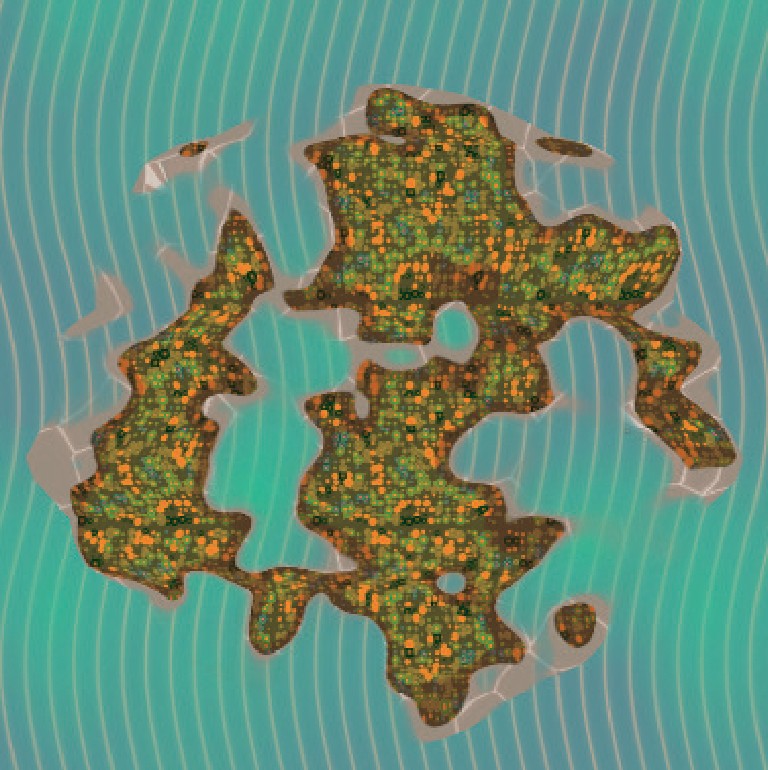
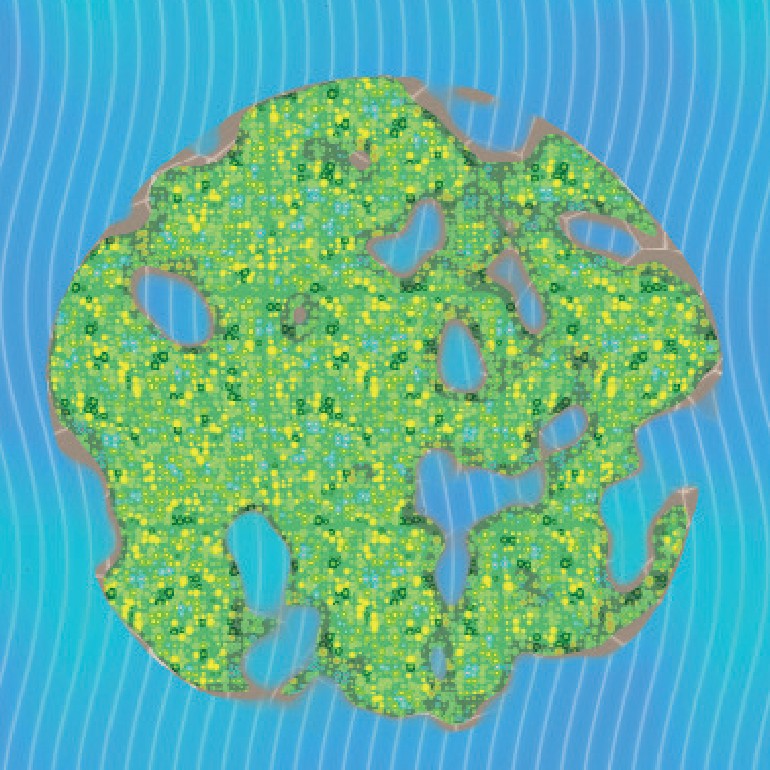
As an embodiment of our environment, we chose to visually represent the entity through a system of interwoven textures. These textures echo the elements that make up our environment: fire, water, earth, organic matter, and wind.
In the event of total environmental degradation, the appearance of a QR code implicitly invites the visitor to continue their learning journey to a dedicated website focused on the rights of living beings. This transition provides both an indirect explanation of the game’s abstract metaphor and a tangible continuation of the educational process.
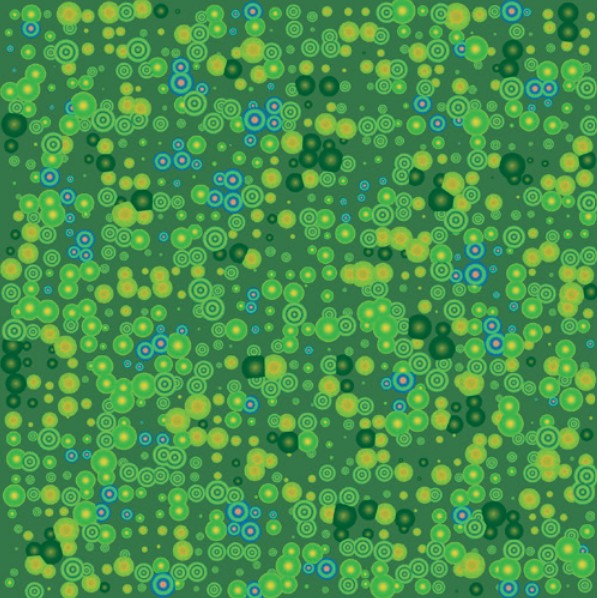
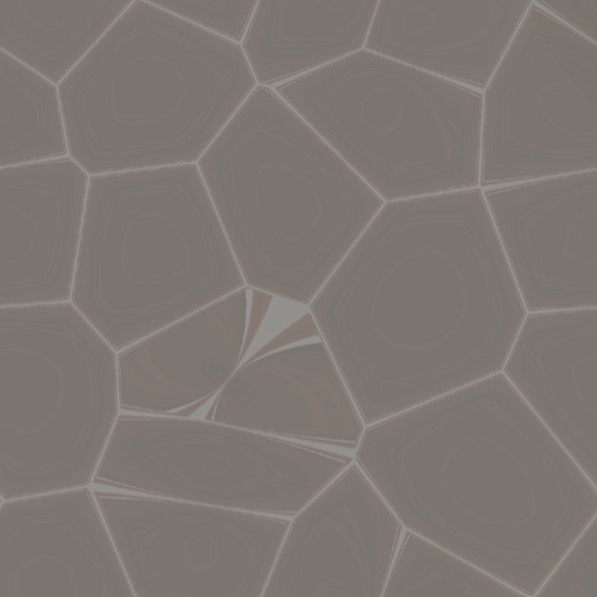
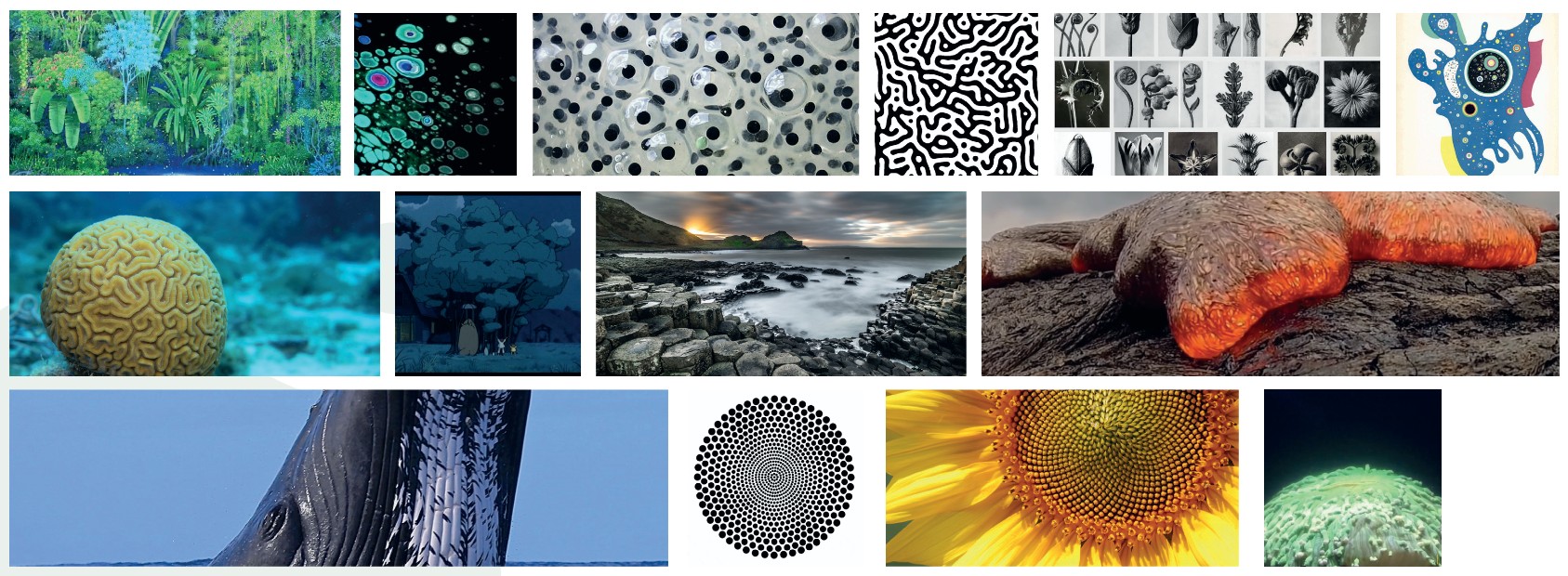
Moodboard
Aents' visual choices favor an abstract and symbolic representation of the environment, thereby avoiding an overly figurative treatment of textures. This approach is nonetheless inspired by natural forms to define the patterns and their animations, striking a balance between abstraction and the evocation of life.
Variations By State
Retrospective
The project could be significantly enhanced by a more polished artistic direction (logo, typography, colors) and by the inclusion of a soundtrack, which is currently missing but essential for deepening the immersion and impact of the experience.
With its abstract and playful approach, Aents effectively captures the attention of visitors in a hurry, serving as a gentle, non-preachy bridge to environmental issues—far removed from direct discussions of individual responsibility.
You can view the project presentation by clicking here. This will allow you to explore in greater detail the topics not covered on this page.